The International Space Station (ISS) partnership, a cornerstone of global space collaboration for over two decades, has been formally extended through 2030. This decision, endorsed by NASA and its international partners—including ESA (European Space Agency), JAXA (Japan Aerospace Exploration Agency), CSA (Canadian Space Agency), and Roscosmos—signals a renewed commitment to sustained human presence and scientific advancement in low Earth orbit. The extension not only reaffirms the value of multinational cooperation in space exploration but also strategically aligns with the growing involvement of commercial entities in space activities, marking a pivotal shift toward a more diversified and economically viable orbital ecosystem.
Since its inception, the ISS has served as an unparalleled platform for scientific research, technological demonstration, and international diplomacy. The decision to prolong operations until 2030 provides a stable timeframe for completing ongoing experiments and initiating new long-term studies, particularly in fields like biology, materials science, and Earth observation. This continuity is crucial for research that requires extended microgravity exposure, such as understanding the long-term effects of spaceflight on the human body—a key concern for future deep-space missions to the Moon and Mars.
Concurrently, the landscape of space operations has been transformed by the rise of commercial spaceflight. Over the past decade, NASA has increasingly embraced public-private partnerships, fostering a new generation of commercial cargo and crew vehicles. Companies like SpaceX and Northrop Grumman now routinely resupply the ISS, while Boeing’s Starliner and SpaceX’s Crew Dragon have restored human launch capabilities from American soil. This shift has not only reduced dependency on foreign launch systems but also stimulated innovation and cost-efficiency in space transportation.
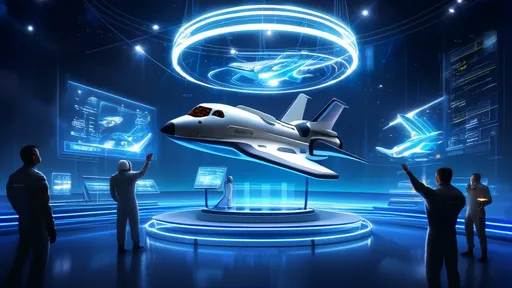
The extension of the ISS to 2030 dovetails with this commercial evolution, offering private companies a predictable and extended market for their services. It allows for the planning and execution of more ambitious private missions, including those involving non-professional astronauts. For instance, Axiom Space is developing commercial modules to attach to the ISS, with plans to eventually detach and form a free-flying private space station. Similarly, Sierra Space is advancing its Dream Chaser spaceplane and LIFE habitat, aiming to support a commercial low Earth orbit economy. The ISS, in this context, acts as both a customer and a testbed for these emerging capabilities.
Moreover, the sustained operation of the ISS provides a bridge to the future of space stations. NASA’s strategy envisions a transition where commercial entities take over primary operations in low Earth orbit, allowing the agency to focus its resources on lunar and Martian exploration through the Artemis program. The ISS extension ensures that there is no gap in the United States’ presence in orbit, giving commercial companies time to develop, certify, and deploy their own stations. This seamless transition is vital for maintaining the United States’ leadership in space and ensuring the continuity of scientific and economic activities in microgravity.
Internationally, the extension reinforces diplomatic ties and shared goals in space. Despite geopolitical tensions on Earth, the ISS remains a symbol of peaceful cooperation. Partners are negotiating how to manage the station’s eventual decommissioning, which will involve a controlled deorbit into the Pacific Ocean. The additional time allows for meticulous planning to ensure this process is safe and environmentally responsible. It also offers opportunities for new international partners and commercial entities from around the world to engage with the station before its retirement.
Financially, the extension justifies continued investment in the ISS and its supporting infrastructure. It provides certainty for budgeting and planning, both for the space agencies and their commercial suppliers. For companies investing in space-based research and manufacturing, the guaranteed access to the ISS until 2030 reduces risk and encourages further investment. This stability is expected to accelerate the growth of the space economy, which includes not only transportation and habitation but also in-space manufacturing, satellite servicing, and even space tourism.
In conclusion, the extension of the International Space Station to 2030 is far more than a simple prolongation of its operational life. It represents a strategic alignment of international cooperation and commercial innovation, ensuring that the invaluable benefits of the ISS—scientific discovery, technological advancement, and diplomatic unity—continue to accrue. At the same time, it provides the runway needed for commercial companies to fully establish themselves in low Earth orbit, paving the way for a future where space is not only explored but also inhabited and industrialized by a diverse array of players. This dual focus on legacy and legacy-making ensures that the ISS will remain a foundational element of humanity’s spacefaring journey for years to come.
By /Sep 16, 2025

By /Sep 16, 2025

By /Sep 16, 2025

By /Sep 16, 2025

By /Sep 16, 2025
By /Sep 16, 2025

By /Sep 16, 2025

By /Sep 16, 2025

By /Sep 16, 2025

By /Sep 16, 2025

By /Sep 16, 2025

By /Sep 16, 2025

By /Sep 16, 2025
By /Sep 16, 2025

By /Sep 16, 2025

By /Sep 16, 2025

By /Sep 16, 2025

By /Sep 16, 2025

By /Sep 16, 2025

By /Sep 16, 2025