In the dense, murky waters of the Amazon, or the frigid currents of the Arctic, a biological revolution is unfolding—one that requires no nets, no traps, and no direct human observation. Environmental DNA, or eDNA, is rewriting the rules of species monitoring, offering a powerful, non-invasive lens into the richness of life on Earth. By simply sampling water, soil, or even air, scientists can now detect the genetic traces left behind by organisms, from the mightiest whales to the most elusive insects. This breakthrough is not merely an incremental improvement in biological surveying; it represents a fundamental shift in how we perceive, measure, and conserve biodiversity.
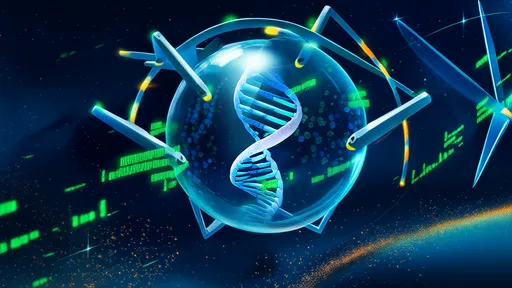
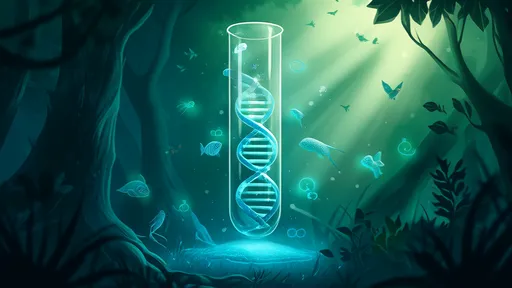
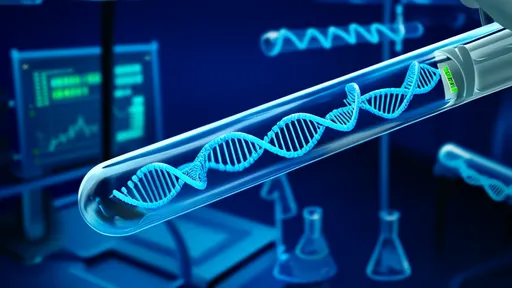
The principle behind eDNA is elegantly simple. Every living creature constantly sheds genetic material into its environment—through skin cells, scales, feces, urine, or gametes. This DNA lingers in the environment for a period, creating a molecular snapshot of the species present in that locale. Researchers collect environmental samples, extract the DNA, and use advanced molecular techniques like metabarcoding—amplifying and sequencing specific genetic markers—to identify which species have contributed to this genetic soup. The process is remarkably sensitive; it can detect species even when they are rare, cryptic, or notoriously difficult to observe directly.
Traditional methods of biodiversity census are often labor-intensive, costly, and disruptive. They might involve electrofishing streams to count fish, setting camera traps for mammals, or conducting visual surveys for birds and insects. These approaches can stress animals, miss hidden or nocturnal species, and require significant expertise and time. In contrast, eDNA sampling is minimally invasive. A single researcher can collect water samples from a lake in minutes, capturing a genetic signature of the entire aquatic community without ever seeing a single fish. This efficiency opens up possibilities for monitoring in remote, vast, or logistically challenging environments, from the deep sea to dense rainforest canopies.
The scalability of eDNA is one of its most transformative aspects. Large-scale biodiversity assessment, once a Herculean task, becomes feasible. Projects can now systematically monitor entire watersheds, coastlines, or protected areas over time, generating comprehensive datasets that were previously unimaginable. This allows scientists to track changes in species distribution and community composition with unprecedented resolution, providing critical early warnings for ecosystem shifts driven by climate change, pollution, or invasive species. It turns sporadic snapshots of biodiversity into a continuous, flowing movie.
Beyond mere presence-absence data, eDNA analysis is rapidly advancing to provide quantitative insights. While challenges remain in precisely correlating DNA quantity to species abundance—due to factors like DNA degradation rates and shedding variability—new statistical models and methodological refinements are steadily improving its accuracy. Scientists are now able to not only list the species in a sample but also estimate their relative biomass or population density. This moves eDNA from a tool for discovery to one for robust ecological monitoring and management.
The applications of this technology are vast and growing. In conservation, eDNA is a game-changer for detecting rare and endangered species. It has been used to confirm the presence of the elusive Scottish wildcat, track the movements of critically endangered freshwater dolphins in Asia, and search for signs of thought-to-be-extinct amphibians. For invasive species management, it serves as an early alarm system, identifying new invaders before they establish large populations and cause ecological or economic damage. In fisheries management, it provides a efficient way to monitor stock health and spawning grounds without disturbing the fish.
Furthermore, eDNA is democratizing biodiversity science. The equipment needed for sample collection is simple and inexpensive, enabling community scientists, local conservation groups, and researchers in developing nations to participate in high-level biomonitoring. This fosters greater inclusivity in global conservation efforts and generates locally relevant data that can inform regional policy decisions. It empowers a broader coalition of stakeholders to become guardians of their own natural heritage.
However, the rise of eDNA is not without its challenges and ethical considerations. The sensitivity of the technique is a double-edged sword; it can detect very low quantities of DNA, but this also makes it susceptible to contamination from other sources, requiring rigorous field and laboratory protocols. The interpretation of data requires careful bioinformatics expertise to avoid false positives or negatives. There are also unresolved questions about the privacy of genetic information, especially when monitoring involves private land or rare species vulnerable to poaching. The field is actively developing standards and best practices to address these issues.
Looking ahead, the future of eDNA is extraordinarily promising. Researchers are exploring the analysis of airborne eDNA to conduct terrestrial biodiversity surveys from the sky—literally taking a sniff of the forest to see what lives within. The integration of eDNA with other technologies like autonomous robotic samplers, remote sensing, and artificial intelligence for data analysis will further automate and expand monitoring capabilities. We are moving towards a future where a global, real-time biodiversity observatory is not just a fantasy, but a tangible goal.
In essence, environmental DNA technology is more than just a new tool; it is a paradigm shift in humanity’s relationship with the natural world. It allows us to listen to the whispers of ecosystems through the genetic material they leave behind, granting us a deeper, richer, and more nuanced understanding of life on our planet. As this field continues to mature, it promises to be an indispensable ally in the urgent mission to document, protect, and restore the dazzling diversity of life that sustains us all. The revolution in species census has truly begun, and it is happening one drop of water, one grain of soil, and one molecule of DNA at a time.

By /Aug 27, 2025
By /Aug 27, 2025
By /Aug 27, 2025
By /Aug 27, 2025
By /Aug 27, 2025
By /Aug 27, 2025

By /Aug 27, 2025

By /Aug 27, 2025
By /Aug 27, 2025
By /Aug 27, 2025
By /Aug 27, 2025
By /Aug 27, 2025

By /Aug 27, 2025
By /Aug 27, 2025
By /Aug 27, 2025

By /Aug 27, 2025
By /Aug 27, 2025

By /Aug 27, 2025

By /Aug 27, 2025
By /Aug 27, 2025