In the relentless pursuit of innovative climate solutions, a groundbreaking frontier is emerging from the depths of the world's oceans. The natural prowess of microscopic algae, specifically diatoms, in sequestering atmospheric carbon is now the focus of an ambitious scientific endeavor. Recent advancements in what is termed the Diatom Biological Pump Enhancement Project are signaling a potential paradigm shift in our approach to large-scale carbon capture, moving beyond terrestrial constraints to harness the vast, untapped potential of the marine environment.
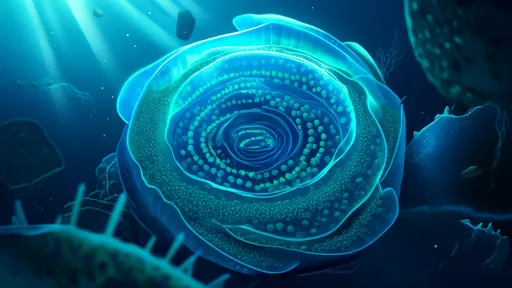
The core principle is elegantly simple yet profoundly complex in its execution. Diatoms, a major group of algae, are among the most common types of phytoplankton. Through photosynthesis, they consume dissolved carbon dioxide in the upper ocean, effectively drawing down CO2 from the atmosphere above. When these organisms die, their silica-based shells, known as frustules, cause them to sink rapidly to the deep ocean floor. This process, a critical component of the ocean's biological carbon pump, effectively transfers carbon from the fast-recycling surface waters to long-term storage in the deep sea and underlying sediments, where it can remain sequestered for centuries or even millennia.
For decades, oceanographers have understood this natural mechanism, but the challenge has always been one of scale. The natural pump is inefficient; a significant portion of the carbon fixed by phytoplankton is recycled back into the atmosphere in the surface ocean. The central question driving the new research is: can we safely and effectively enhance this natural process to significantly increase the rate and volume of carbon sequestration? The latest wave of studies and pilot projects suggests the answer might be a cautious yes.
The most promising new developments revolve around targeted nutrient enrichment, specifically of iron and silicon. It has long been established that vast areas of the ocean, particularly in the Southern, North Pacific, and Equatorial Pacific regions, are High-Nutrient, Low-Chlorophyll (HNLC) zones. In these areas, phytoplankton growth is limited not by macronutrients like nitrate or phosphate, but by a scarcity of trace metals, most notably iron. Small-scale, controlled iron fertilization experiments have repeatedly demonstrated that adding bioavailable iron to these waters can trigger massive diatom blooms, sometimes visible from space.
The new engineering leap involves moving beyond simple fertilization to a more sophisticated, systems-based approach. Researchers are now developing and deploying slow-release, bioavailable nutrient platforms. Unlike the one-time dispersal of iron sulfate used in earlier experiments, these platforms are designed to release nutrients over an extended period, sustaining a bloom for longer and promoting the growth of specific, heavily silicified diatom species. The selection of species is crucial; larger diatoms with thicker silica shells not only fix more carbon per cell but also sink much faster, drastically reducing the chance of the fixed carbon being remineralized and released back into the atmosphere before reaching the deep ocean.
Concurrently, advances in marine genomics and microbial ecology are playing a pivotal role. Scientists are now able to identify and, in controlled settings, cultivate "super-sinker" diatom strains. These are naturally occurring varieties that exhibit exceptionally high carbon fixation rates and produce denser, more robust frustules. The project is strictly avoiding genetic modification in open waters, focusing instead on identifying ideal conditions that favor the natural proliferation of these efficient strains during an enhanced bloom event. This eco-engineering approach aims to work with, rather than against, complex marine food webs.
Perhaps the most significant hurdle for any ocean-based climate intervention is the comprehensive assessment of its ecological impact. Critics of earlier geoengineering proposals rightly pointed to potential unintended consequences, such as the development of low-oxygen zones (hypoxia) or the disruption of delicate marine ecosystems. The new generation of projects is addressing these concerns head-on with an unprecedented level of monitoring and modeling. Autonomous underwater gliders, drone ships, and satellite surveillance are deployed to track the bloom's development, its biogeochemical consequences, and its eventual fate. The data collected is fed into increasingly sophisticated predictive models to understand the full life cycle of an enhanced bloom and its net carbon export efficiency.
Early results from these tightly monitored pilot studies are cautiously optimistic. They indicate that with careful site selection—prioritizing HNLC zones with deep ocean floors and strong lateral currents to aid in dispersing the bloom—the carbon sequestered can be significant. Preliminary estimates suggest a well-executed enhancement could sequester several grams of carbon per square meter of ocean surface over the bloom's lifetime, with a high percentage of that carbon reaching depths below 1000 meters, effectively locking it away from the atmosphere for long time scales.
Despite the exciting progress, the path forward is fraught with scientific, ethical, and governance challenges. The international community lacks a robust legal framework to govern such large-scale marine operations. Questions about verification, monitoring, and long-term liability remain largely unanswered. The scientific community is acutely aware that the stakes are immense; a misstep could cause ecological damage and erode public trust in all climate solutions. Therefore, the prevailing mantra among research consortia is one of extreme caution, transparency, and incremental scaling.
The enhancement of the diatom biological pump does not represent a silver bullet for the climate crisis. It is, at best, a potential tool in a much larger portfolio of mitigation and negative emissions technologies that must include drastic reductions in greenhouse gas emissions at their core. However, the recent engineering advances in this field open a fascinating new chapter in climate action. They represent humanity's growing willingness to look to nature's own sophisticated systems for inspiration, not to dominate them, but to partner with them in the monumental task of restoring balance to our planet's carbon cycle.

By /Aug 27, 2025
By /Aug 27, 2025
By /Aug 27, 2025
By /Aug 27, 2025
By /Aug 27, 2025
By /Aug 27, 2025
By /Aug 27, 2025
By /Aug 27, 2025
By /Aug 27, 2025

By /Aug 27, 2025

By /Aug 27, 2025
By /Aug 27, 2025

By /Aug 27, 2025
By /Aug 27, 2025
By /Aug 27, 2025

By /Aug 27, 2025
By /Aug 27, 2025

By /Aug 27, 2025

By /Aug 27, 2025
By /Aug 27, 2025